

The rated current of a vacuum interrupter for a Vacuum Circuit Breaker (VCB) is a crucial parameter that significantly influences the performance and application scope of the entire circuit - breaker system. As a supplier of vacuum interrupters for VCBs, I am deeply involved in understanding and dealing with this important aspect.
Understanding the Concept of Rated Current
The rated current of a vacuum interrupter refers to the maximum continuous current that the interrupter can carry under specified conditions without exceeding its temperature - rise limits. It is a fundamental characteristic that determines the interrupter's ability to handle electrical loads in a circuit. When the current flowing through the vacuum interrupter is within the rated current value, the interrupter can operate stably, and its internal components, such as contacts and conductive parts, will not overheat due to excessive current.
Factors Affecting the Rated Current
Contact Material and Geometry
The material of the contacts in a vacuum interrupter plays a vital role in determining the rated current. High - quality contact materials with good electrical conductivity, such as copper - chromium alloys, are commonly used. These materials can withstand high currents and have excellent arc - quenching properties. The geometry of the contacts also matters. Well - designed contact shapes can ensure a large contact area, which helps to reduce the contact resistance and thus allows for a higher rated current. For example, some advanced contact designs use a spiral or petal - like shape to increase the effective contact area and improve current - carrying capacity.
Heat Dissipation
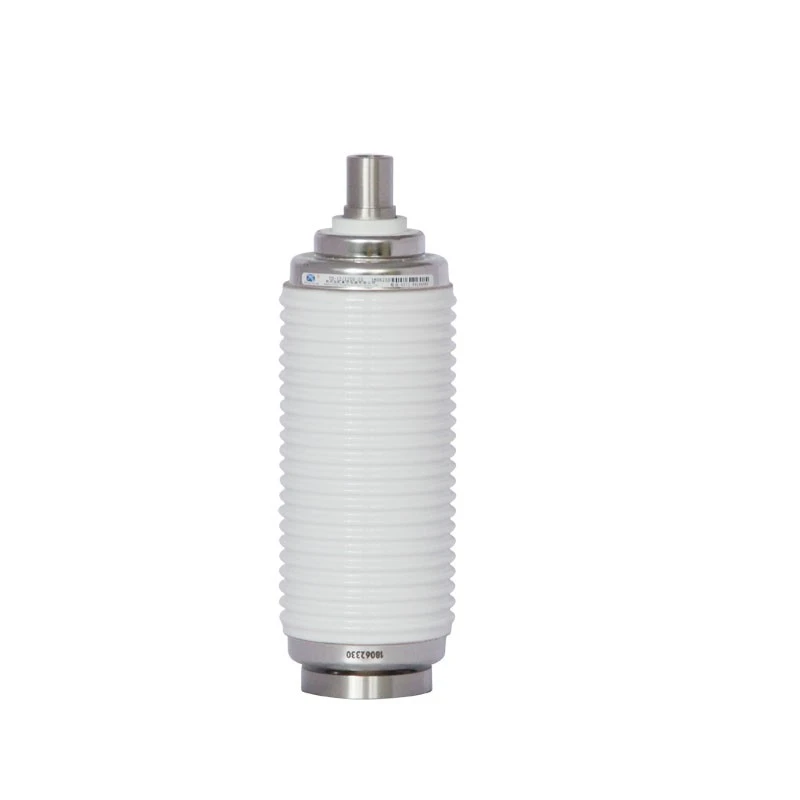
Effective heat dissipation is essential for a vacuum interrupter to maintain its rated current. Since the current flowing through the interrupter generates heat, proper heat - dissipation mechanisms need to be in place. The design of the interrupter's enclosure and the use of heat - conducting materials can enhance heat transfer to the surrounding environment. Some vacuum interrupters are equipped with heat sinks or fins to increase the surface area for heat dissipation, which enables them to handle higher currents.
Vacuum Level
The vacuum level inside the interrupter is another critical factor. A high - quality vacuum environment can prevent arcing and reduce energy losses. If the vacuum level is not maintained properly, it can lead to increased resistance and heat generation, which may limit the rated current. Therefore, strict manufacturing processes are required to ensure a high and stable vacuum level inside the interrupter.
Importance of Rated Current in VCB Applications
Power Distribution Systems
In power distribution systems, the rated current of vacuum interrupters in VCBs determines the capacity of the circuit breakers to handle electrical loads. For example, in a medium - voltage distribution network, different sections of the network may have different load requirements. A VCB with a higher - rated current vacuum interrupter can be used in areas with large industrial loads or high - density residential areas, where the demand for electricity is relatively high. On the other hand, in areas with lower loads, VCBs with lower - rated current vacuum interrupters can be sufficient, which helps to optimize the cost and performance of the power distribution system.

Industrial Applications
Industrial facilities often have complex electrical systems with various types of equipment. The rated current of vacuum interrupters in VCBs used in these facilities needs to be carefully selected according to the specific requirements of the equipment. For instance, large - scale manufacturing plants with heavy machinery may require VCBs with high - rated current vacuum interrupters to ensure reliable power supply and protection against short - circuits and overloads.
Different Rated Current Ranges in Vacuum Interrupters
Vacuum interrupters for VCBs come in a wide range of rated current values. Low - rated current vacuum interrupters, typically in the range of a few hundred amperes, are commonly used in small - scale power distribution systems or for protecting individual electrical appliances. Medium - rated current vacuum interrupters, ranging from several hundred amperes to a few thousand amperes, are widely used in medium - voltage power distribution networks and industrial applications. High - rated current vacuum interrupters, with ratings above several thousand amperes, are used in high - power applications such as large - scale power plants and heavy - duty industrial facilities.
Selecting the Appropriate Rated Current
When selecting the rated current of a vacuum interrupter for a VCB, several factors need to be considered. First, the expected load current in the circuit should be accurately estimated. This requires a detailed analysis of the electrical equipment connected to the circuit and their power consumption characteristics. Second, future expansion plans should also be taken into account. If there is a possibility of increasing the load in the future, it may be advisable to choose a vacuum interrupter with a slightly higher rated current to avoid the need for frequent replacements.
As a supplier of vacuum interrupters for VCBs, we offer a wide range of products with different rated currents to meet the diverse needs of our customers. Our Vacuum Interrupters for Circuit Breaker are designed with the latest technology and high - quality materials to ensure reliable performance. For medium - voltage applications, our 11KV Vacuum Interrupter provides excellent current - carrying capacity and arc - quenching capabilities. And our Vacuum Interrupter for MV VCB is specifically tailored to meet the requirements of medium - voltage circuit breakers.
If you are in the process of selecting a vacuum interrupter for your VCB, we are here to assist you. Our team of experts can provide professional advice on choosing the right rated current based on your specific application and requirements. We are committed to providing high - quality products and excellent customer service. Whether you are involved in power distribution, industrial manufacturing, or other related fields, we can offer the most suitable vacuum interrupter solutions for you. Don't hesitate to contact us for procurement and further discussions.
References
- Blackburn, J. L. (2014). Protective Relaying: Principles and Applications. CRC Press.
- Greenwood, A. (1991). Electrical Transients in Power Systems. Wiley - Interscience.
- IEEE Std C37.010 - 2002. IEEE Application Guide for AC High - Voltage Circuit Breakers Rated on a Symmetrical Current Basis.