

Hey there! As a supplier of 11KV Vacuum Interrupters, I've seen firsthand how crucial the coordination between an 11KV Vacuum Interrupter and a circuit breaker is. In this blog, I'm gonna break down what these coordination requirements are and why they matter so much in the electrical world.
Let's start with the basics. A vacuum interrupter is a key component in a circuit breaker. It's responsible for interrupting the current flow when there's a fault or when you need to switch the circuit on or off. The 11KV Vacuum Interrupter, as the name suggests, is designed to work at an 11 kilovolt voltage level. And a circuit breaker is a device that can automatically stop the flow of electricity in a circuit when it detects an abnormal condition, like an overload or a short - circuit.
Electrical Rating Compatibility
One of the most important coordination requirements is electrical rating compatibility. The voltage rating of the 11KV Vacuum Interrupter must match the voltage level of the circuit breaker. If the voltage rating of the interrupter is too low, it won't be able to handle the electrical stress in the circuit, which can lead to breakdowns and failures. On the other hand, if the rating is too high, it might be over - engineered and more expensive than necessary.
For example, our 11KV Vacuum Interrupters are specifically designed to work with circuit breakers operating at 11KV. This ensures that they can handle the normal operating voltage as well as any transient over - voltages that might occur during switching operations. You can check out more about Voltage Interrupter on our website to get a better understanding of the voltage ratings and their importance.
The current - carrying capacity is another aspect of electrical rating compatibility. The interrupter must be able to carry the normal load current of the circuit without overheating. At the same time, it should be able to interrupt the fault current safely when a short - circuit occurs. Our 11KV Vacuum Interrupters are tested to ensure that they can handle both the continuous current and the high - magnitude fault currents.
Mechanical Coordination
Mechanical coordination between the 11KV Vacuum Interrupter and the circuit breaker is also vital. The interrupter needs to be properly installed and aligned within the circuit breaker. Any misalignment can cause uneven stress on the contacts, which can lead to premature wear and tear.
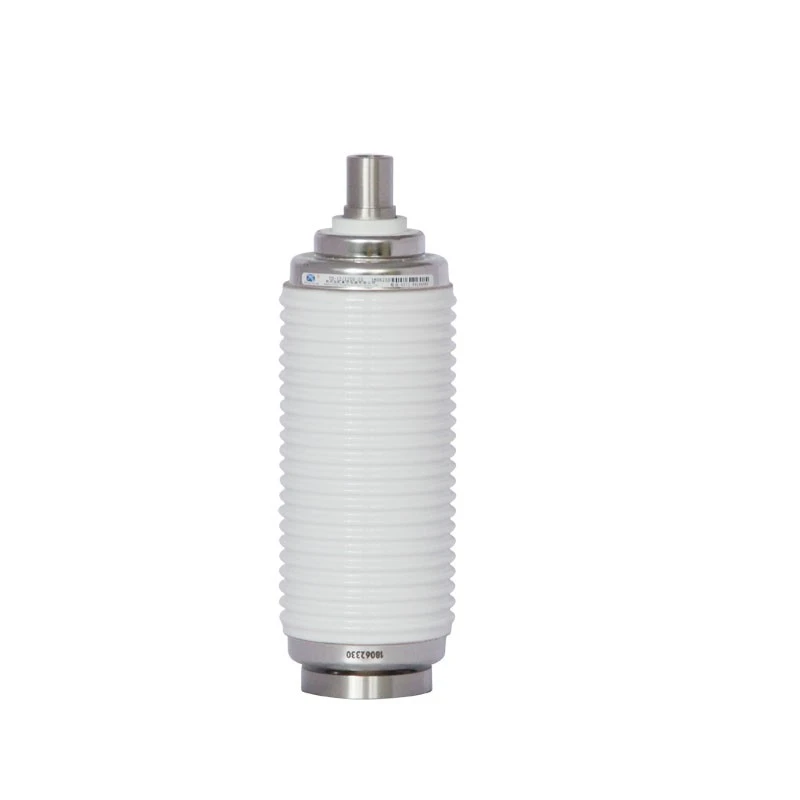

The operating mechanism of the circuit breaker must be able to actuate the interrupter correctly. The opening and closing times of the circuit breaker should be synchronized with the operation of the interrupter. For instance, when the circuit breaker receives a trip signal, it should be able to open the interrupter quickly enough to interrupt the fault current. Our team can provide guidance on the mechanical installation and alignment to ensure that everything works smoothly.
Arc - Quenching Coordination
When the contacts of the 11KV Vacuum Interrupter separate during a switching operation, an arc is formed. The main function of the interrupter is to quench this arc as quickly as possible. The circuit breaker and the interrupter need to work together to achieve efficient arc - quenching.
The design of the interrupter, such as the shape and material of the contacts, plays a role in arc - quenching. Our Vacuum Interrupter for MV VCB is engineered with advanced contact materials and designs to ensure fast and reliable arc - quenching. The circuit breaker's operating speed and the way it applies pressure to the interrupter also affect the arc - quenching process.
Control and Monitoring Coordination
In modern electrical systems, control and monitoring are becoming increasingly important. The circuit breaker and the 11KV Vacuum Interrupter should be coordinated in terms of control signals. The circuit breaker should be able to receive control commands and transmit them to the interrupter accurately.
Monitoring the condition of the interrupter is also crucial. Some modern interrupters come with built - in sensors that can provide information about the contact wear, temperature, and other parameters. The circuit breaker should be able to interface with these sensors and transmit the data to a central monitoring system. This allows for proactive maintenance and reduces the risk of unexpected failures.
Environmental Compatibility
The 11KV Vacuum Interrupter and the circuit breaker need to be compatible with the environmental conditions in which they operate. Factors such as temperature, humidity, and pollution can affect their performance.
Our products are designed to withstand a wide range of environmental conditions. For example, they are tested to operate in high - temperature environments without losing their electrical and mechanical properties. If you're operating in a harsh environment, we can provide you with the right type of Vacuum Interrupter for Low VCB that can handle the specific challenges.
Cost - Benefit Analysis
When considering the coordination between an 11KV Vacuum Interrupter and a circuit breaker, cost - benefit analysis is also important. You want to make sure that you're getting the best value for your money.
Our 11KV Vacuum Interrupters offer a great balance between performance and cost. They are reliable, long - lasting, and require minimal maintenance. By choosing our products, you can reduce the overall cost of ownership in the long run.
Why Choose Our 11KV Vacuum Interrupters
We've been in the business of supplying 11KV Vacuum Interrupters for a long time. Our products are made with high - quality materials and advanced manufacturing processes. We have a team of experts who can provide technical support and advice on the coordination between the interrupter and the circuit breaker.
If you're looking for a reliable 11KV Vacuum Interrupter that can work seamlessly with your circuit breaker, we're here to help. Whether you're involved in a new installation or a retrofit project, we can offer you the right solution.
Let's Connect
If you're interested in learning more about our 11KV Vacuum Interrupters or have any questions about the coordination requirements, don't hesitate to reach out. We're always happy to have a chat and discuss how our products can meet your needs. Whether it's for a small - scale project or a large - scale industrial application, we've got you covered.
References
- Electrical Power Systems: Principles and Applications, by Ali A. Chowdhury
- High - Voltage Vacuum Interrupters: Theory, Design, and Application, by M. S. Islam